A day off for Greg today, and he went to ‘Omer’ – St Omer.
Diary

Tuesday Aug 20th. Day off – went to Omer.
St Omer
This was Greg’s third visit to St Omer. The two previous occasions were here:
and here:
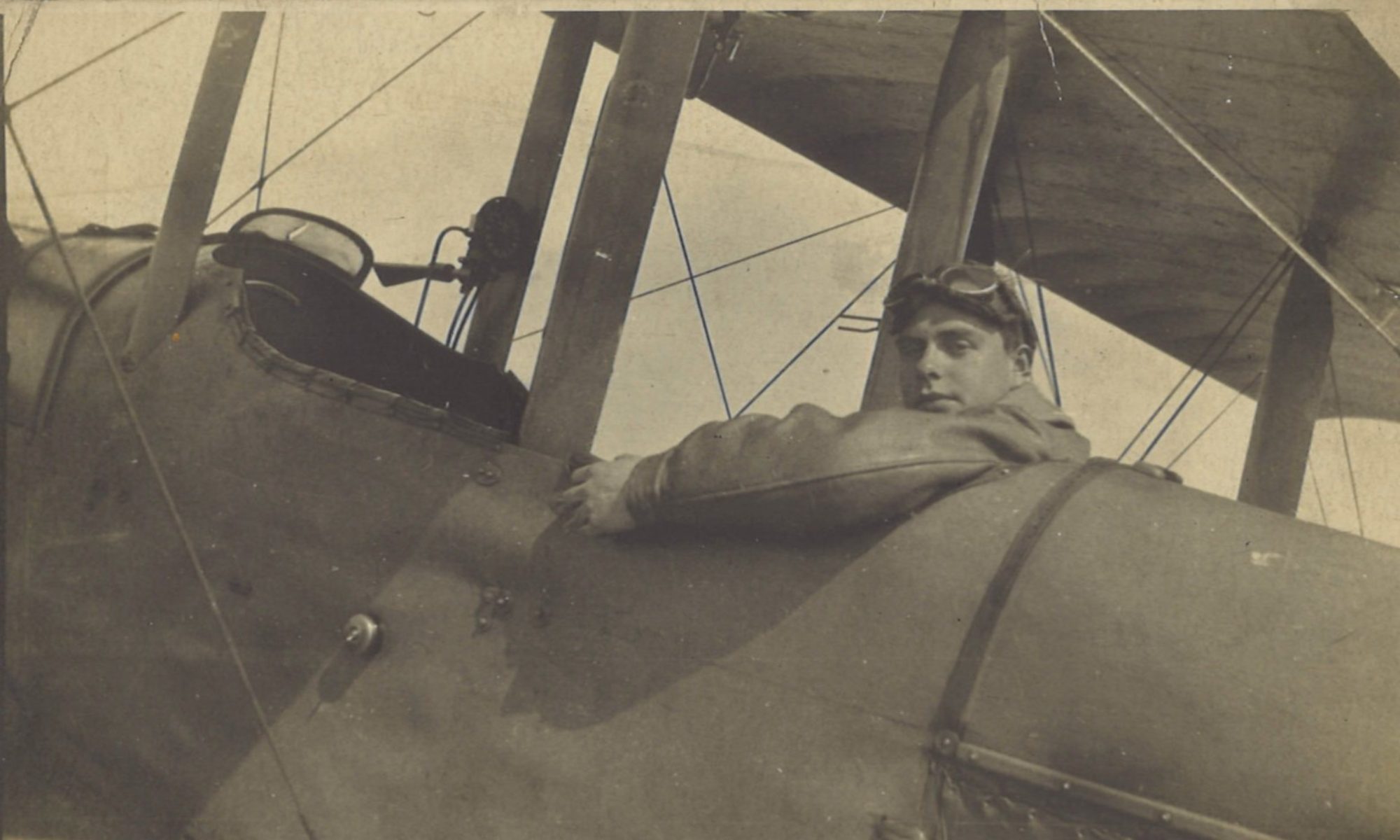

The war experiences of 2nd Lt. C. E. Gregory RFC/RAF in 1918
A day off for Greg today, and he went to ‘Omer’ – St Omer.
Tuesday Aug 20th. Day off – went to Omer.
This was Greg’s third visit to St Omer. The two previous occasions were here:
and here:
An intended early counter battery patrol was cancelled in view of the weather. So Greg had the day off and went to St Omer. A “good time”; but a close encounter with some bombs at night.

August 1st 1918.  Thursday.  CBP at 5.30am.  Too dud to take off, heavy fog and ground mist.

Went to St Omer at 11.am & came back at 7.  Good time, quite a change from camp.

Bomb raid at night.  10 bombs dropped near us.
St Omer was something of an aviation hub during the First World War. It was the largest British airfield on the Western Front, and the centre of operations for the RFC and then the RAF. There was also an associated hinterland of supply facilities. Socially, it was quite a buzz too. Nonetheless, as Cross & Cockade International reports, there was a variety of views on the merits of the place:
The town itself seems to have brought out mixed reactions. Major Edward (Mick) Mannock, described St Omer as a ‘nasty town, mainly composed of estaminets, old women, and dirty – very dirty children’, while Lieutenant Harry van Goethem, who arrived with 10 Squadron at St Omer in July 1915, appears to have relished his brief time billeted there describing his visit as ‘historic’. He particularly enjoyed the Café Vincent and ‘the wonderful waitress (Jeanne) whose fair coiffe was the admiration of countless thousands of British officers. “Given the number of squadrons for whom a night out in St Omer was a regular social event – being recognised as a meeting place for members of any squadron within a reasonable distance – it may be concluded that for the majority of RFC personnel it was an agreeable destination. (https://www.crossandcockade.com/StOmer/)
From Greg’s brief report, he evidently shared the majority view.

A day of contrasts: Greg does battle with a machine gun post in the morning, and takes a kitten called Snowball up for a test flight later in the day. Then he visits St Omer.


Date: 15.7.18
Hour: 11.45-1.30
Machine type: RE8
RE8: 2526
Observer: Lt. Hodgson
Time: 1 hr 45 m
Height: 2000
Course/Remarks: CBP. 4 Cooper bombs. 650 rds Vickers & Lewis
Date: 15.7.18
Hour: 5.35-6.20
Machine type: RE8
RE8: E27
Observer: Lt. Hodgson
Time: 45 m
Height: 2000
Course/Remarks: Engine test – Eng OK

Monday July 15th.  E27 dud.  C.B.P. 10.30 to 1.30. (Actually 11.45-1.30.)  Eventually took up Martin’s bus as E27 was hopelessly dud.

Managed to find a Hun machine gun firing at us from the ground.

Strafed him pretty badly, but could not make him shut up.  Rotten weather – cloudy & poor visibility.

E27 repaired.  Took her up in the evening for a test with Lt Hodgson as passenger, also kitten Snowball.  Snowball apparently enjoyed the trip but objected to the wind.  Did most of the journey under Hodgson’s coat.

Visited St. Omer.
More details of the patrol, and the location of the machine gun post, are in the Squadron Record Book:

Type and Number: R.E.8.2526
Pilot and Observer: P. Lt Gregory. O. Lt Hodgson
Duty: Artillery Patrol
Hour of Start: 11.45
Hour of Return: 13.30
Remarks: 11.55. 4-25lb bombs dropped on K.36.a.5.6.  All bursts observed, two on the railway.
12.15. C.W.S. sent R.A.  [see map below] R.A. kept under observation, but no flashes seen.
12.15. sent U.L. U.R. U.D.  [Unfit for counter-battery work, artillery registration or photography]
12.30. explosion at Q.3.c.4.7. S. of the siding.  [see map]
12.33. one flash seen in Q.B.10.  K.K. sent.  No more flashes seen at this place.
13.10. C.W.S. sent X.  250 rounds V.G. fired into trenches round CALONNE. [see map] 300 rounds L.G. into trenches and back areas, and 100 rounds L.G. at active M.G. post at K.26.c.6.4.  [see maps]
Height 12/1800’.  E.A. nil.  A.A. normal.  Vis. poor to fair.  Obs. P. & O.

Here is a larger scale map showing the position of the machine gun post at K.26.c.6.4, which is right on the German front line. The British front line is about 250 yards away.

Nothing more is recorded either of Kitten Snowball or of Greg’s visit to St Omer that evening.